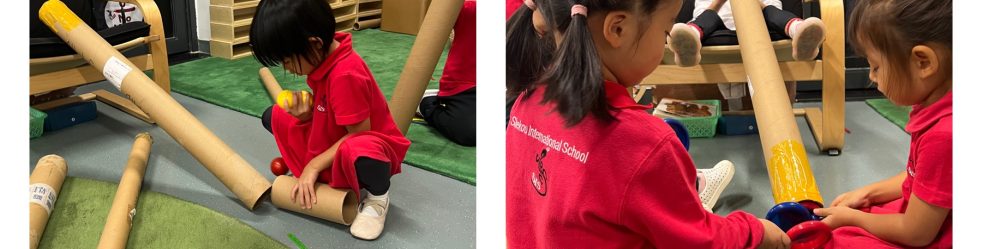
Video to showcase the unit during an Early Primary Assembly
For our three-year-old students, this inquiry is not entirely student-led, as they are still in an adjustment period where their socio-emotional development is the priority. It is crucial to ensure that the children feel safe, form strong connections, and trust their environment, as these factors play a significant role in their ability to thrive and have a positive learning experience.
To start, we connect with the class environment and ensure that the students see themselves in every corner of the classroom. This is their space, and all their belongings have a designated place. Each child’s voice is valued, and they are encouraged to express their opinions. Parents are actively involved in the learning process, and we welcome their ideas in choosing the identity we will hold as a class for the year.
In our class, we engage in various activities to learn about each other. The children can read class books independently, and attendance is one of our all-time favorites. During attendance, we encourage the children to practice being caring citizens by wondering why a friend is absent. We make cards or calls if someone is going to be away for longer than usual to show that they are missed in our class. As we get to know each other better, we do mini inquiries into ourselves. We explore our names, our physical appearance, and our likes and dislikes. We play face puzzle games, create “The Story of My Name” book, where parents tell us about each child’s name and why it was chosen, and make a Life Album where parents share pictures that highlight their child’s most important life events. We also make our own self-portraits and play riddle games to try to identify each other. Our families are an important part of who we are, and we invite them to participate in mini inquiries. We learn about different families and their composition and link it to math by comparing more and less. We also learn to take care of our space, clean and organize it, and be safe, respectful, and responsible with our classmates. Once we have developed a strong sense of community, we extend our experiences to interact with other grade levels and broaden our connections as a school.
This unit is of great importance, as it will set the tone for the school year. Children learn to trust teachers and school, connect with their peers, and understand the importance of many characteristics from our learner profile, which help them leverage their skills for life.
 Lindsay Vargas